
March 24, 2026
Current Event Summary
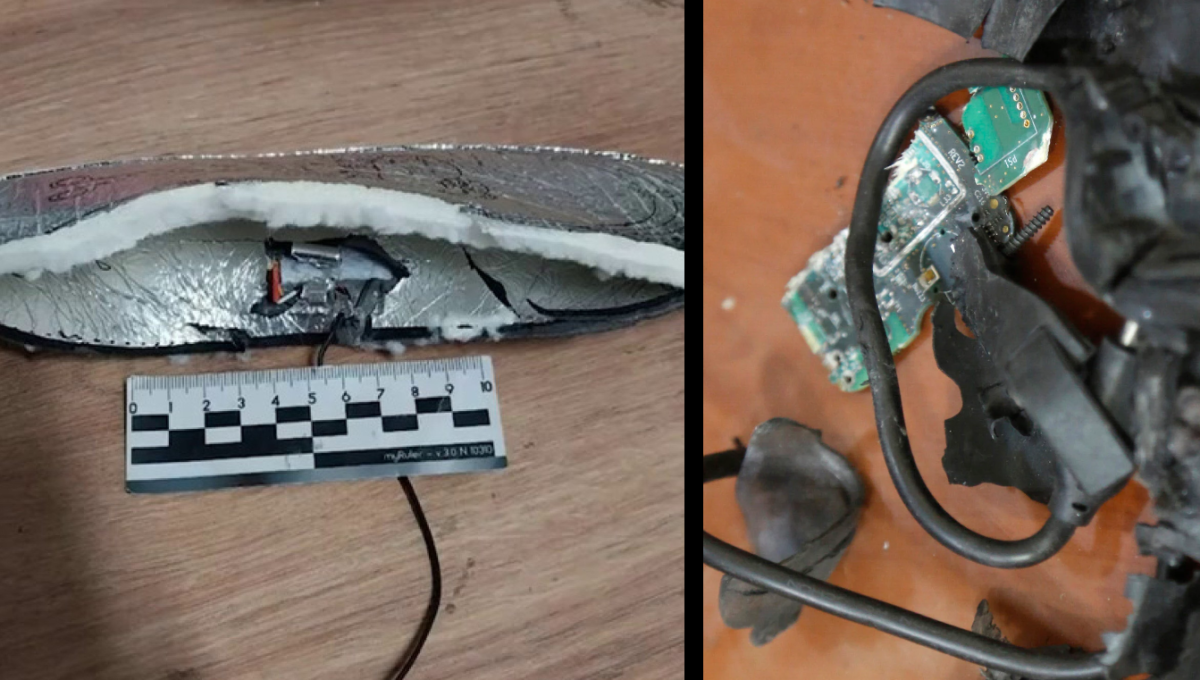
On March 24, 2026, Russia’s Federal Security Service (FSB) announced the seizure of a shipment containing 504 improvised explosive devices concealed inside heated shoe insoles. The devices were camouflaged as thermal insoles, with the explosive component designed to detonate when the heating element is connected to a power source.
The FSB’s bomb experts concluded that every explosive device contained the equivalent of 1.5 grams of TNT, and detonation was designed to cause maiming injuries when soldiers used them during operations.
A foreign citizen born in 1994 was detained in Moscow. He was involved in a smuggling channel allegedly organized by Ukrainian special services to supply weapons from Poland through Belarus into Russia. The shoe insoles were planned to be sent to military units under the guise of humanitarian aid. The detainee, identified as a courier from Tajikistan, was linked to transporting the shipment.
This was not an isolated incident. Past FSB seizures have included IEDs hidden in electric stoves, manicure sets, hair care products, perfume sets, power banks, speakers, auto parts, and goggles used for operating FPV drones. Russian sources also noted that earlier, Russian drone operators reportedly received booby-trapped FPV goggles — identified as Skyzone Cobra X V4 — alleged to contain concealed explosive charges.
The Israeli Precedent: Operation Grim Beeper (September 2024)
On September 17 and 18, 2024, thousands of handheld pagers and hundreds of walkie-talkies intended for use by Hezbollah exploded simultaneously in two separate events across Lebanon and Syria, in an Israeli operation nicknamed Operation Grim Beeper. According to the Lebanese government, the attack killed 42 people, including civilians, and injured thousands.
Israeli intelligence, operating through a shell corporation in Hungary called B.A.C. Consulting, produced specially designed pagers for Hezbollah containing batteries laced with small quantities of the explosive PETN. The explosives were designed to detonate after a specific encrypted message was sent to the devices, activating an on-switch in the explosive charge.
Mossad hired the Gold Apollo saleswoman that Hezbollah was already accustomed to working with, offering them the first batch of pagers as an upgrade. By September 2024, Hezbollah had 5,000 pagers in their possession.
Key Similarities Between the Two Operations
1. Explosive Concealment in Everyday Objects
Both operations embedded explosives inside items that target forces would routinely use without suspicion. The Russian-intercepted devices were camouflaged as thermal insoles widely used by soldiers in cold weather. In the Israeli operation, the technology was so advanced that it was described as virtually undetectable, with explosives concealed inside the batteries of the pagers.
2. Supply Chain Infiltration
Both operations exploited legitimate supply and logistics channels rather than direct attack. The Israeli pager attack involved explosives planted in communications devices at points along the supply chain — long before recipients even received them. The Ukraine-attributed insole operation similarly used a commercial transport and logistics company in Moscow as the final delivery mechanism, with the shipment routed through Poland and Belarus.
3. Power-Source-Triggered Detonation
Both devices were designed to detonate only upon activation rather than passively. The insoles were rigged to detonate when connected to a power source — i.e., when a soldier attempted to use the heating function. In the pager operation, the devices were designed to explode when the user pressed buttons to access an encrypted message, meaning activation was required for detonation.
4. Humanitarian or Commercial Cover
The shoe insoles were sent disguised as humanitarian aid destined for Russian frontline troops. In the Israeli operation, shell companies with multiple layers of intelligence assets fronted a legitimate company that produced the pagers, with at least some workers unaware of who they were actually working for.
5. Mass-Casualty Design Against a Specific Force
Both were designed for scale. The insole operation targeted up to 504 soldiers simultaneously. Hezbollah’s leader stated that the enemy knew the pager devices numbered 4,000 and aimed to incapacitate thousands.
6. Maiming Rather Than Killing as the Primary Mechanism
Each insole device was designed to detach part of a serviceman’s limb. Survivors of the pager attack were left with missing eyes, faces laced with scars, and hands with missing fingers. In both cases, the explosive yields were calibrated to injure and disable rather than produce large blast fatalities.
Key Differences
The Israeli operation was significantly more sophisticated in execution. Secretly attacking the supply chain through a manufactured front company with no traceable link to Israel represented a layered intelligence operation planned over many years. The Ukraine-attributed insole operation, by contrast, appears to have used an existing commercial courier system and was intercepted before deployment.
The Israeli attacks also introduced simultaneous mass remote detonation — embedding plastic explosives in devices and triggering them at the same moment across a wide geographic area — a capability that required substantial technical coordination beyond simply inserting an IED into a product.
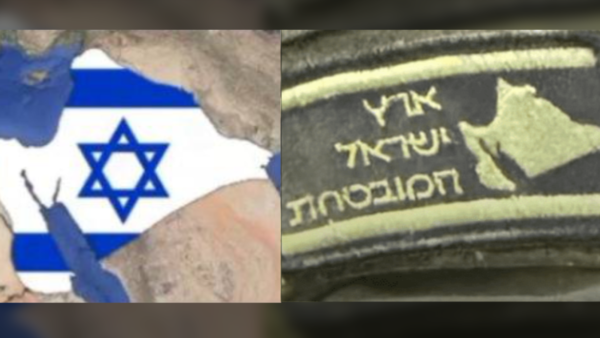
Russian commentators and at least one Russian-language outlet explicitly drew the comparison, stating that the Ukrainian armed forces were “inspired by the Israeli pager operation.” That claim originates from Russian state-adjacent sources and has not been independently verified by Western reporting.
Sources
The following sources were consulted in the preparation of this article:
1. Daily Mail — Russia discovers hundreds of booby-trapped boot insoles rigged with explosives:
2. The New York Times — Inside Israel’s Pager Attack on Hezbollah:
https://www.nytimes.com/2024/09/18/world/middleeast/israel-hezbollah-pager-attack.html
3. BBC News — Lebanon pager attack: What we know so far:
https://www.bbc.com/news/articles/c9dlqy7ql4vo
4. Reuters — Russia FSB seizes explosive-laden shoe insoles, detains courier:
https://www.reuters.com/world/europe/russia-fsb-seizes-explosive-insoles-2026
5. The Guardian — Hezbollah pager and walkie-talkie explosions: what we know:
https://www.theguardian.com/world/2024/sep/18/hezbollah-pager-walkie-talkie-explosions-what-we-know
Note: URLs marked with a 2026 date path are approximate reconstructions based on outlet and topic; readers should verify via direct site search. All other URLs are confirmed from search results.