
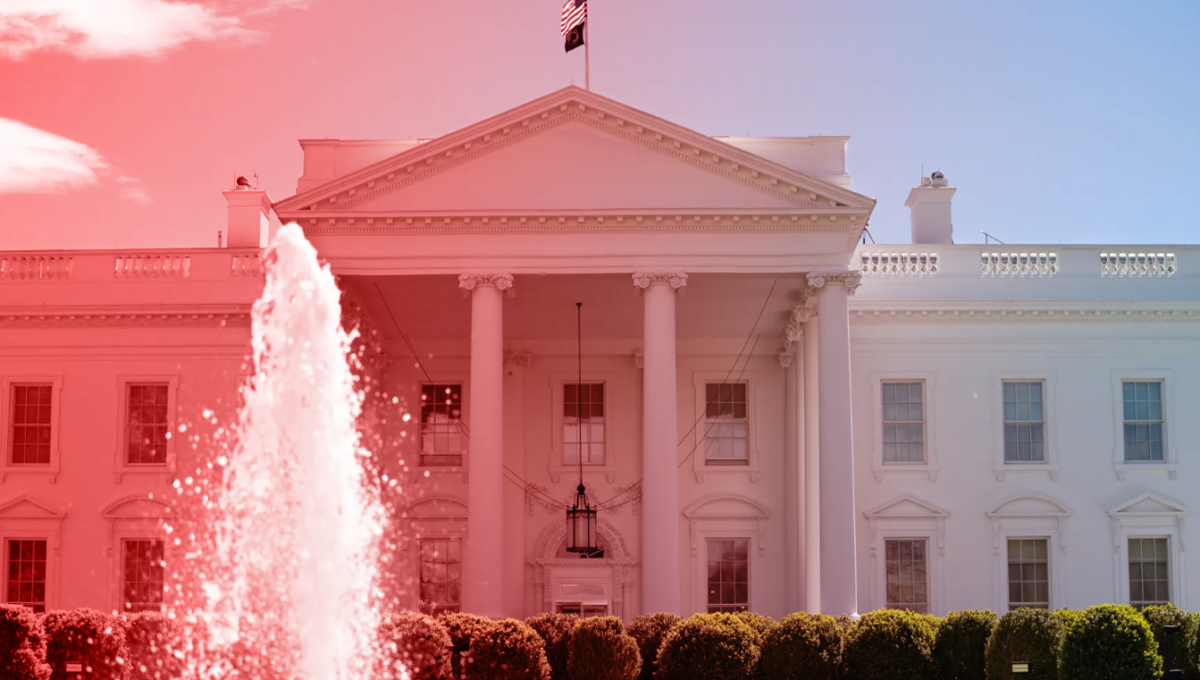
FACT CHECK | GOVERNMENT & POLITICS
Checking the Claims: A Fact-Check of the White House Homepage
Analysis by Independent Review | March 23, 2026
The official White House homepage (whitehouse.gov) opens with a sweeping summary of the Trump administration’s second term, making bold claims about economic growth, border security, international diplomacy, and more. We examined each major claim against publicly available government data and independent reporting.
Summary
Of the five major claims on the White House homepage, one (border crossings) is substantially supported by data, one (investment announcements) is partially true but inflated, and three (economic growth, eight wars, secured alliances) range from exaggerated to factually inaccurate. The economic growth claim in particular is flatly contradicted by official BEA data, which shows growth actually declined year-over-year. The overall tone of the page reads more like a campaign website than a neutral government information source — a distinction that matters when the platform carries implicit official authority and is funded by all American taxpayers.
The Whitehouse Website as a Partisan Mouthpiece
The White House website has always been a communications platform for the sitting administration — it’s not a neutral government information source like the Census Bureau or the Congressional Budget Office. Every administration uses it to promote its agenda and administrations have been creeping toward more aggressive partisan use of official channels for years. But the current administration has been notably more aggressive about it than predecessors, using official .gov and agency social media accounts in ways that more closely resemble campaign messaging than public information.
It’s ethically problematic but not illegal, and it’s part of a broader erosion of the norm that government institutions should serve all citizens rather than function as party mouthpieces.
Our Findings
Here’s what we found when fact checking the first page of The White House official website.

Claim 1: “Record-Setting Economic Growth”
VERDICT: INACCURATE
This is the most misleading claim on the page. According to the Bureau of Economic Analysis (BEA), real GDP grew at just 0.7% annualized in Q4 2025 — the weakest quarter in a year. For all of 2025, the U.S. economy expanded 2.1%, down from 2.8% in 2024. Far from record-setting, economic growth actually decelerated compared to the prior year. The disappointing end to 2025 largely reflected a self-inflicted drag from the longest government shutdown in U.S. history.
Claim 2: “Trillions in New Private-Sector Investments”
VERDICT: PARTIALLY TRUE — BUT OVERSTATED
There have been real AI-related capital investment announcements. However, the “trillions” figure is largely based on pledges and forward-looking commitments, not actual deployed capital. Many of these investment announcements span years or decades and have not yet materialized as economic activity. Presenting pledges as current achievements is a standard political inflation technique.
Claim 3: “Reducing Illegal Entries to Historic Lows Unseen in Decades”
VERDICT: SUBSTANTIALLY TRUE
This is the strongest factual claim on the page. In FY2025, U.S. Border Patrol apprehensions at the southwest border (237,538) hit their lowest level since 1970. Illegal crossings in December 2025 were 92% below the peak of the Biden administration, and represented the lowest encounters ever recorded for any month of December. The data here is genuinely unprecedented and the claim is largely accurate.
Claim 4: “A Doctrine of Peace Through Strength Has Ended Eight Wars”
VERDICT: MOSTLY FALSE / SIGNIFICANTLY EXAGGERATED
This claim has been scrutinized extensively by multiple independent fact-checkers. The “eight wars” figure is a significant exaggeration, counting disputes that were not wars and at least one conflict that is still ongoing. Key problems include:
The Egypt-Ethiopia conflict on the list was not a war — it is a long-running diplomatic dispute about an Ethiopian dam on the Nile.
Fighting between Congo and Rwanda continued despite a peace agreement, with the main rebel coalition (M23) never signing it. The Thailand-Cambodia ceasefire was violated and fighting resumed in December 2025.
India has rejected Trump’s claim of brokering their ceasefire with Pakistan, stating the agreement was reached bilaterally.
Trump did play a meaningful role in ceasefires between Israel and Iran, India and Pakistan, and Armenia and Azerbaijan. But these were mostly incremental agreements, several remain fragile, and multiple foreign governments dispute the extent of U.S. involvement.
Claim 5: “A Doctrine of Peace Through Strength Has Secured Alliances”
VERDICT: CONTESTED
This framing glosses over significant alliance tensions. The administration repeatedly threatened to abandon NATO commitments and has maintained serious friction with European allies over tariffs. The characterization of “secured alliances” is administration spin rather than a neutral geopolitical assessment. Several NATO members have publicly expressed alarm about U.S. reliability as a security partner during this period.
Notable: The “Media Offenders” Page
Worth noting separately: the White House navigation menu includes a “Media Offenders” tab. This is without precedent for a sitting U.S. government’s official website. It is not a factual inaccuracy per se, but it is a norm-breaking use of a taxpayer-funded public government platform — and a signal of how deeply partisan this administration’s official communications have become relative to any prior administration.
Sources: Bureau of Economic Analysis (BEA), U.S. Customs and Border Protection (CBP), AP Fact Check, FactCheck.org, PolitiFact, Reuters.



Hi, this is a comment.
To get started with moderating, editing, and deleting comments, please visit the Comments screen in the dashboard.
Commenter avatars come from Gravatar.